
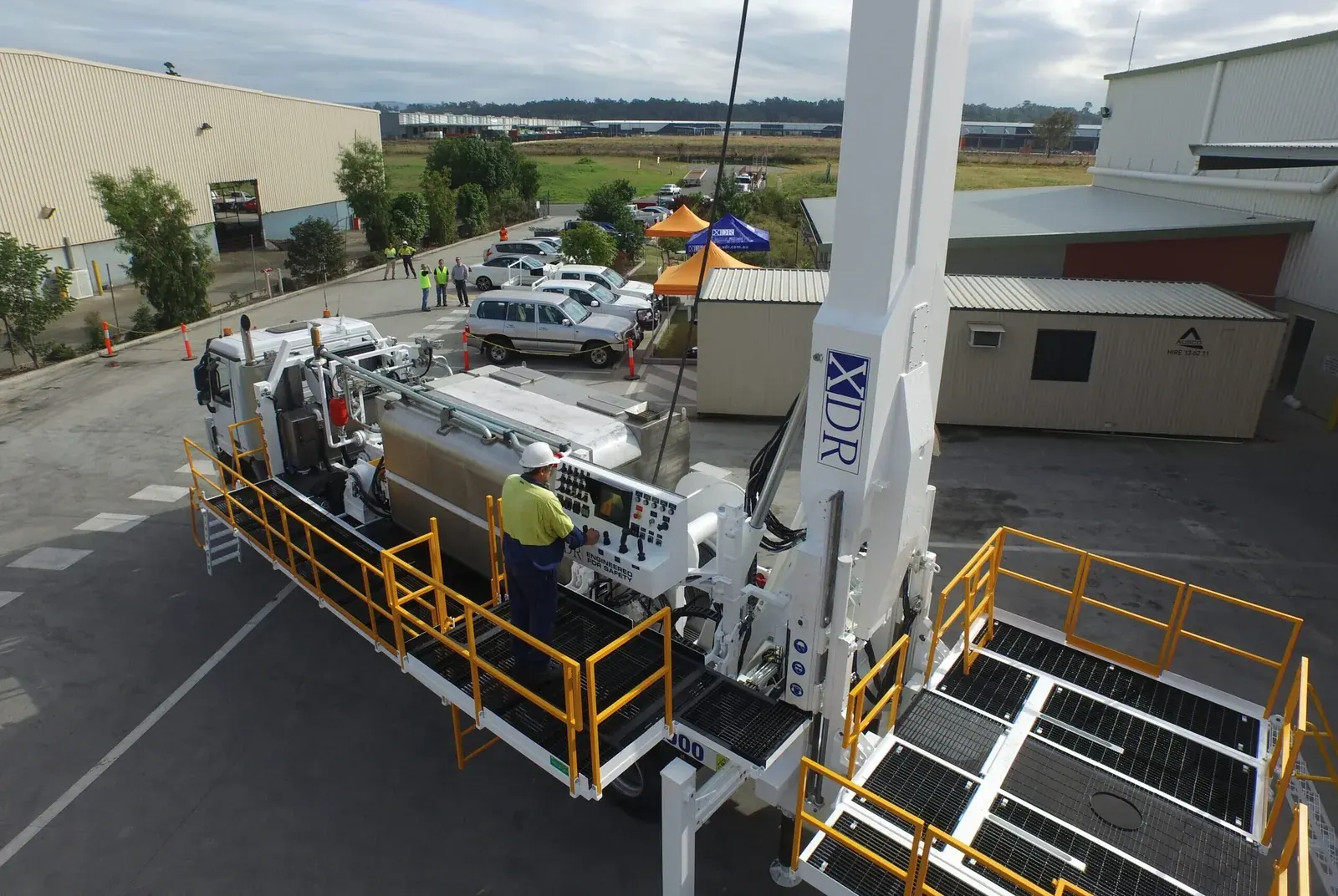
Integrated disciplines. Intelligent solutions.
Mechanical, structural, hydraulic, controls, embedded and electrical engineering — one team, one building, one accountable capability. Where most projects are handed between separate specialists, we hold the whole chain from first concept model to a commissioned, field-proven machine.
Concept to commissioning.
Seven disciplines, one integrated capability. Each carries its own engineering sheet below — the approach, the standards, and where it fits in the complete system.
Nothing is committed to steel on assumption.
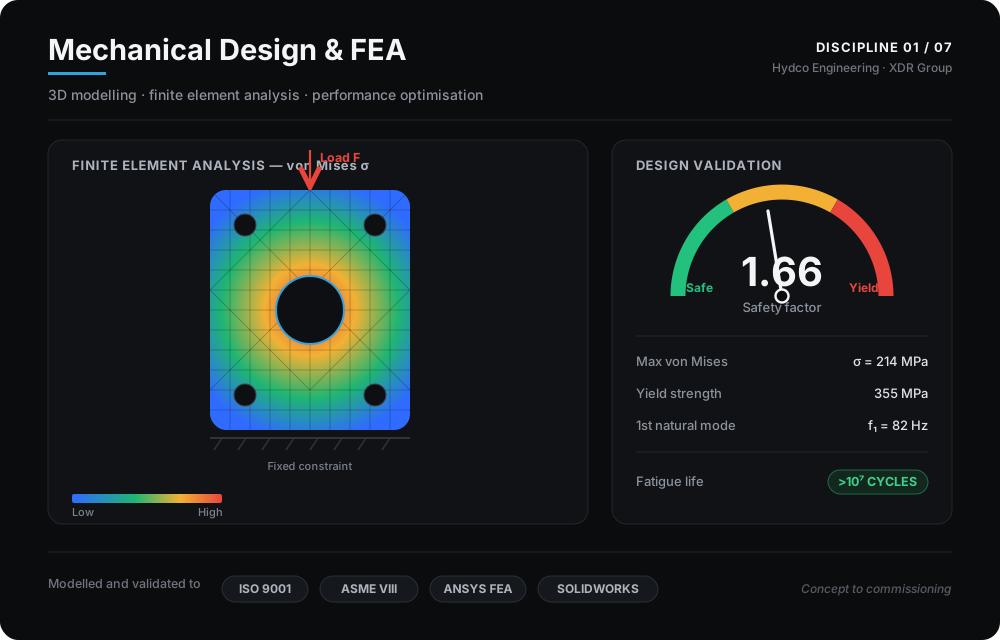
Mechanical design is the foundation of the end-to-end capability. Our engineers turn complex concepts into robust, manufacturable designs — and every load-bearing part is meshed, loaded and checked against yield and fatigue in simulation, so problems are solved on screen, where they are cheap, rather than in the field, where they are not.
- 3D mechanical design for precision manufacture and assembly
- Finite element analysis — stress, vibration and fatigue under real operating loads
- Performance optimisation — geometry and mass refined for strength and durability
- Material selection and validation for demanding duty cycles
Signed off by a second engineering judgement.
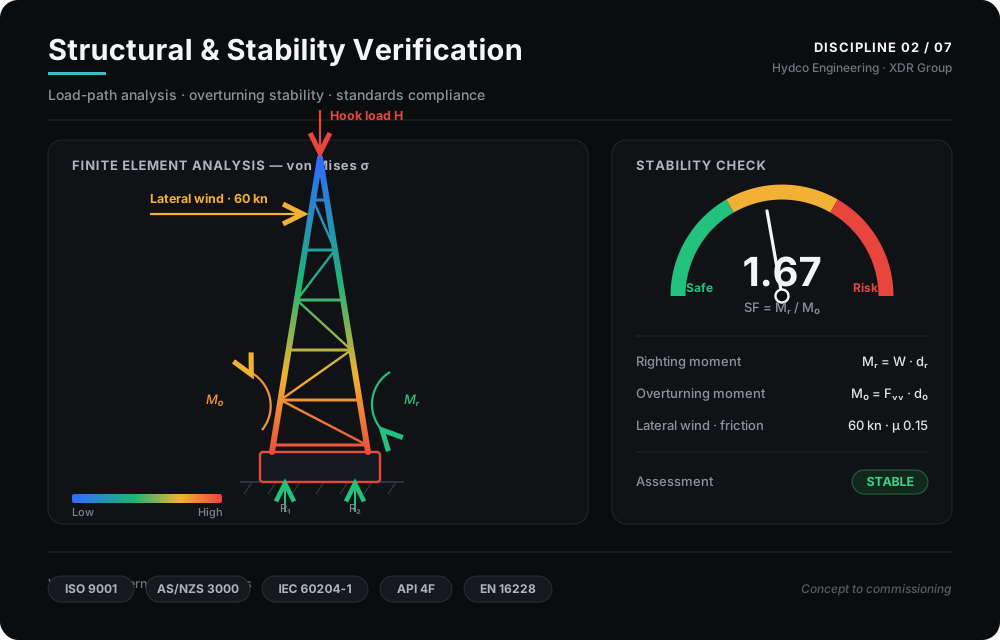
Structural integrity is the backbone of every design we deliver — not a box ticked at the end. Verification runs independently of the design team: each structure is checked to carry its loads safely and stay standing under the worst conditions it will meet in service, from lateral wind to dynamic operating loads.
- Load-path, stress-concentration and material-behaviour analysis
- Static and dynamic stability — overturning and righting-moment safety factors
- Compliance with IEC, AS/NZS, ISO and API requirements
- Fit-for-purpose design — reliability and service life, not over-built cost
Every circuit treated as a closed energy loop.
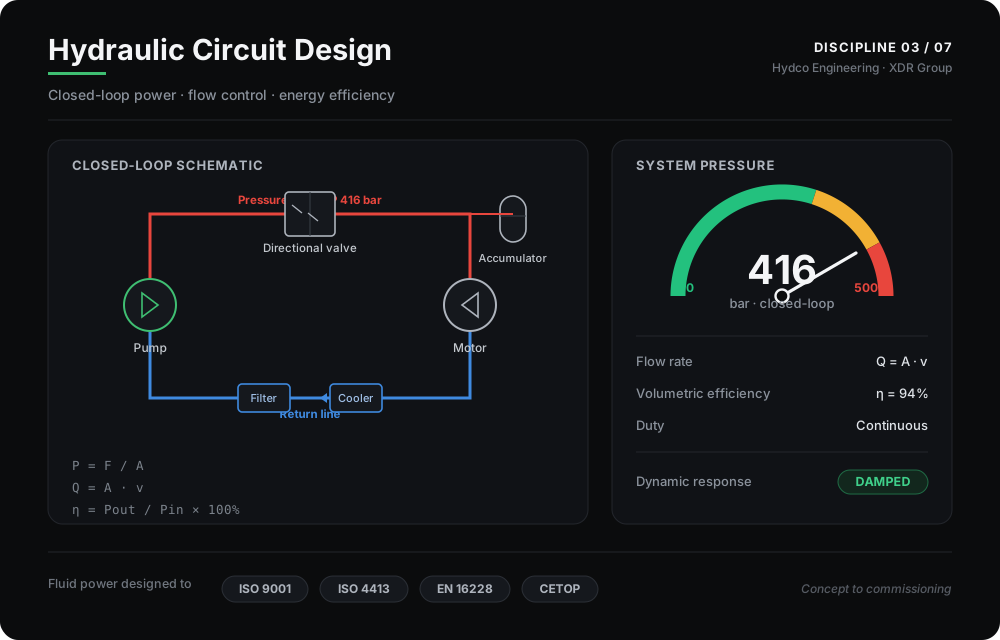
Hydraulic design starts from pressure, flow and energy conversion — balancing generation, control and actuator response so the system performs predictably in the field. And it runs alongside the machine shop that manufactures the cylinders, so circuits are sized by the people who'll build them.
- Closed-loop circuit design — drawworks, winches, multi-actuator systems
- Cylinder, motor and pump selection and sizing to duty cycle
- Efficiency and stability — flow paths, damping and dynamic response
- Fault diagnosis and design correction on existing hydraulic systems
Automation you can read.
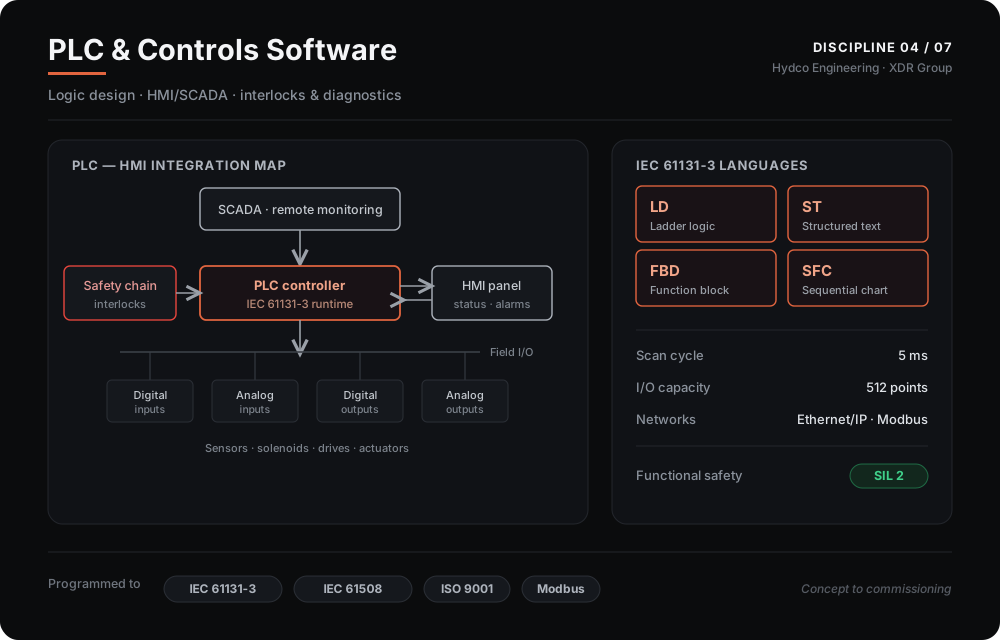
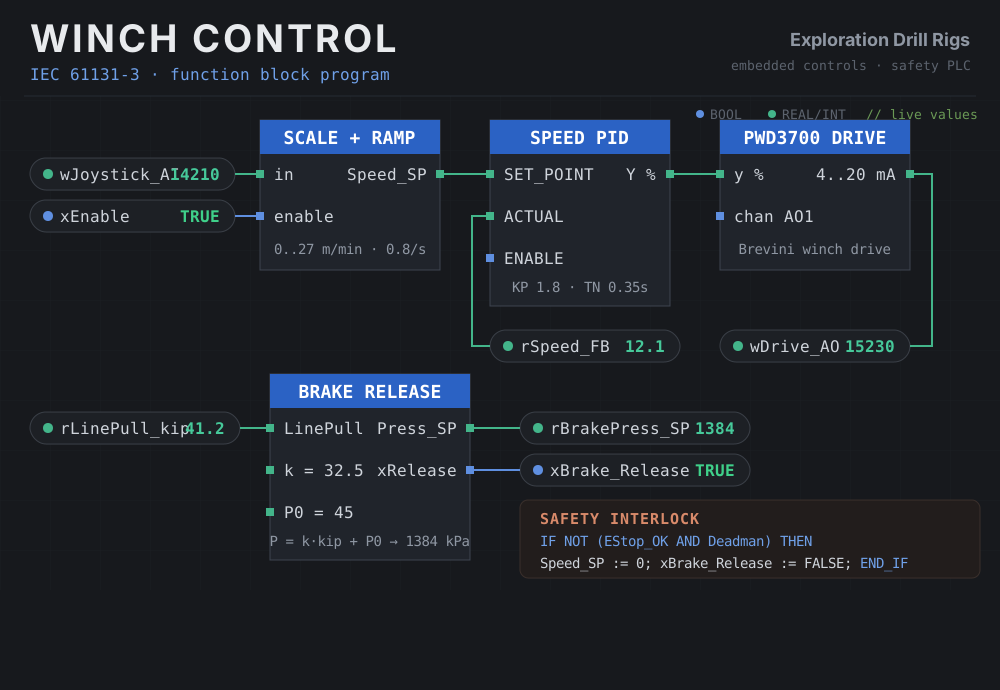
The group develops its own rig control and telemetry platform — Xenon, on a CODESYS / IEC 61131-3 architecture — and runs it in the field on safety-rated PLCs: automatic levelling, hoist-motion monitoring, safe-torque-off supervision and interlock logic engineered for every operating state. It's written in the same office that runs the FEA, and built to be maintained by your own people years after commissioning, not just to pass a factory acceptance test.
- PLC programming — CODESYS / IEC 61131-3 (Ladder, ST, FBD, SFC) on safety-rated controllers
- Safety function blocks — interlocks, hoist monitoring, automatic levelling
- CANopen · J1939 · Modbus TCP — drives, engines, chillers and third-party equipment
- HMI and SCADA design with diagnostic transparency built in

The intelligence layer inside the machine.
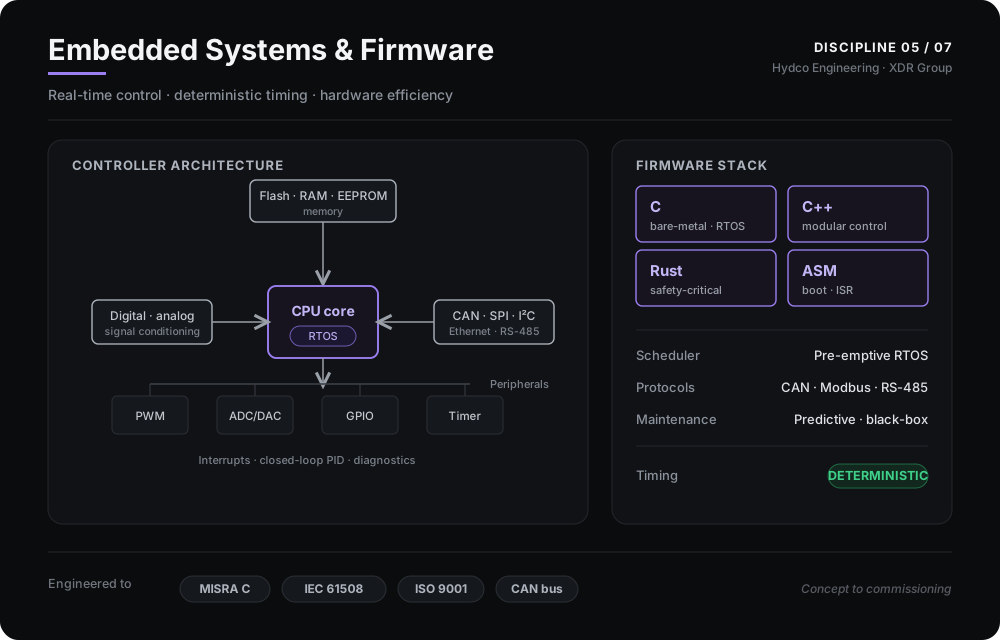
Embedded systems link sensors, actuators and communication interfaces into one coherent operating environment — real-time firmware on microcontrollers and industrial SBC platforms, integrated cleanly with the IEC PLC layer above. It's the layer our fleet intelligence stands on: every group rig streams hundreds of live channels from remote sites, over satellite, into Xenon Prevent — the AI-assisted machine-integrity platform we built ourselves. Telemetry is judged continuously against engineer-written norms, so a developing problem is raised as a finding before it becomes a failure.
- Firmware development — real-time, deterministic control
- Satellite-linked remote telemetry across the operating fleet
- AI-assisted preventative maintenance and machine-integrity monitoring
- Low-level drivers and protocols — CAN, Modbus, RS-485
- Diagnostics and black-box logging for predictive maintenance
Power and control, integrated.
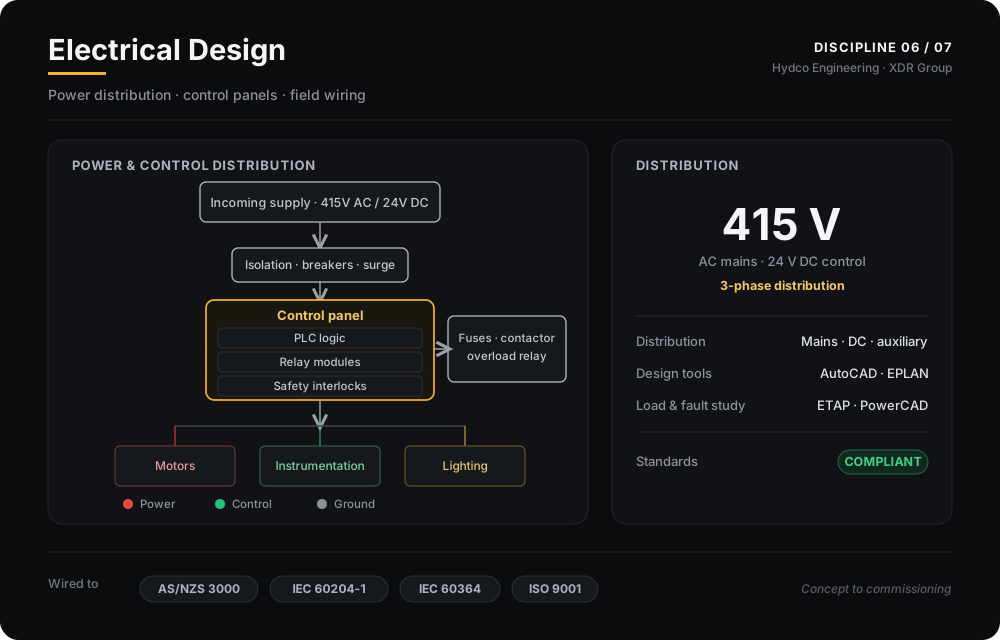
Electrical design underpins every control and power system we build. The focus is clarity, safety and maintainability — every circuit, panel and harness designed to integrate with the hydraulic and control logic around it, and laid out so fault-finding is straightforward.
- Electrical schematic design and power distribution
- Logical circuit hierarchy and consistent wire numbering
- Cable sizing and protection
- Standards compliance — IEC, AS/NZS
Accountability with a name on it.
Safety-rated control systems are designed and documented to the standards below, backed by quantitative risk assessment and DFMEA. On Australian projects, the work carries RPEQ sign-off — engineering accountability held by a named, credentialed engineer, not a compliance checkbox.
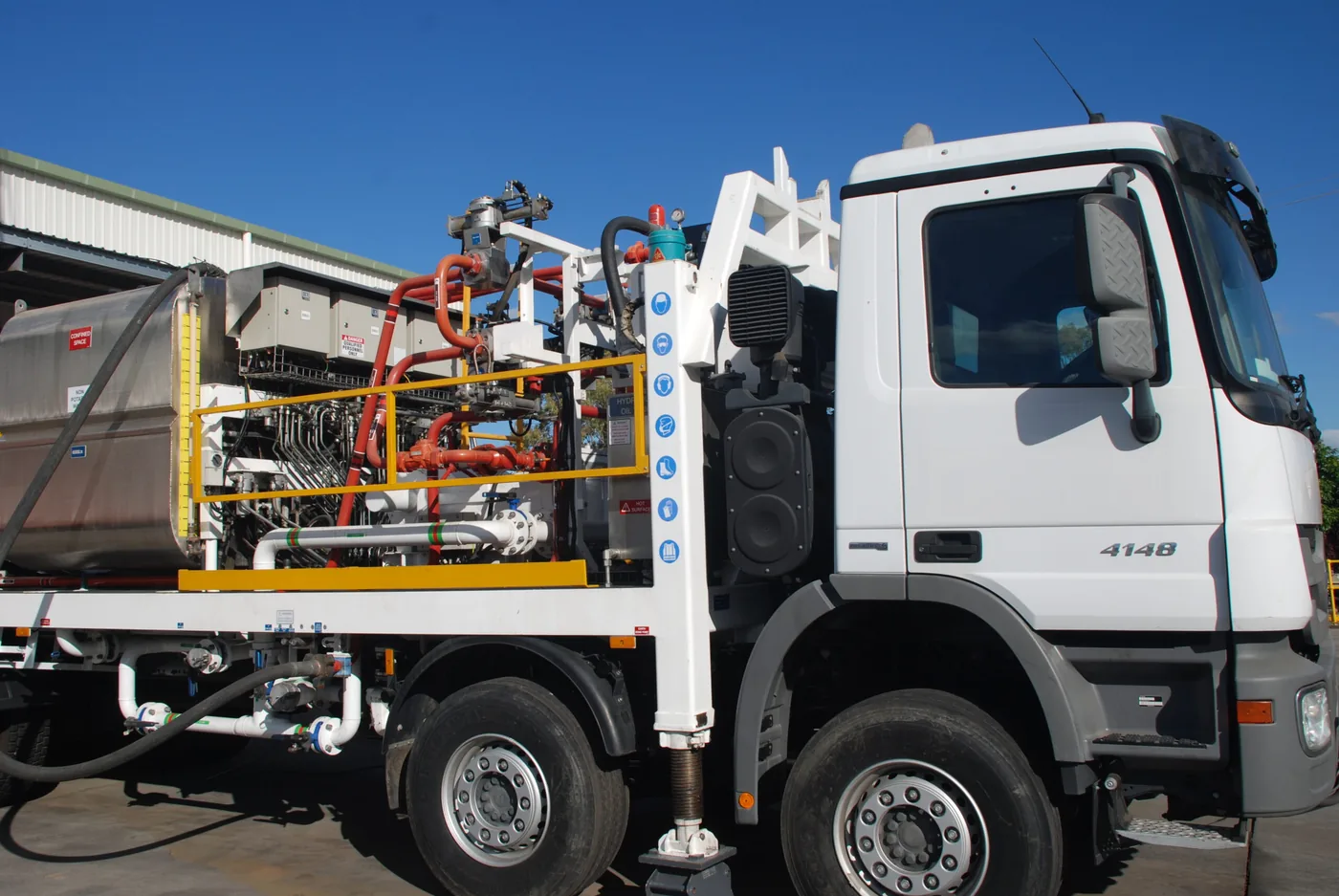
Bring us the problem before the drawing exists.
Design-for-manufacture works best when it starts early. Talk to the engineering team about what you're trying to build.